
What Do You See on a Night Hike in Montezuma? Inside the Nocturno Night Journey
By JC Aguirre, licensed guideUpdated 5 min read
Short answer
On a guided night hike near Montezuma you walk a forest trail for about two hours after sunset with headlamps and a guide who knows where to look. Typical sightings include red-eyed tree frogs, banded geckos, tarantulas, scorpions glowing under UV light, walking sticks, sleeping birds, kinkajous and armadillos. The pace is slow and the distance short, but the trail is uneven, so it is our only tour not recommended for small children.
- When
- After sunset, about 2 hours
- Pace
- Slow and quiet; short distance on an uneven trail
- Likely sightings
- Tree frogs, geckos, tarantulas, scorpions, insects, sleeping birds
- Possible
- Kinkajou, armadillo, owls, snakes (from a distance)
- Age
- Not recommended for small children
Most of the animals in a tropical forest are active after dark. Walk the same trail at 10 am and at 7 pm and you meet two different forests: the daytime one belongs to birds, monkeys and butterflies; the night one belongs to frogs, geckos, spiders, insects and shy mammals that nobody sees from a hammock. The Nocturno Night Journey is our way of showing you the second forest, slowly and safely.
What you are likely to see
Frogs
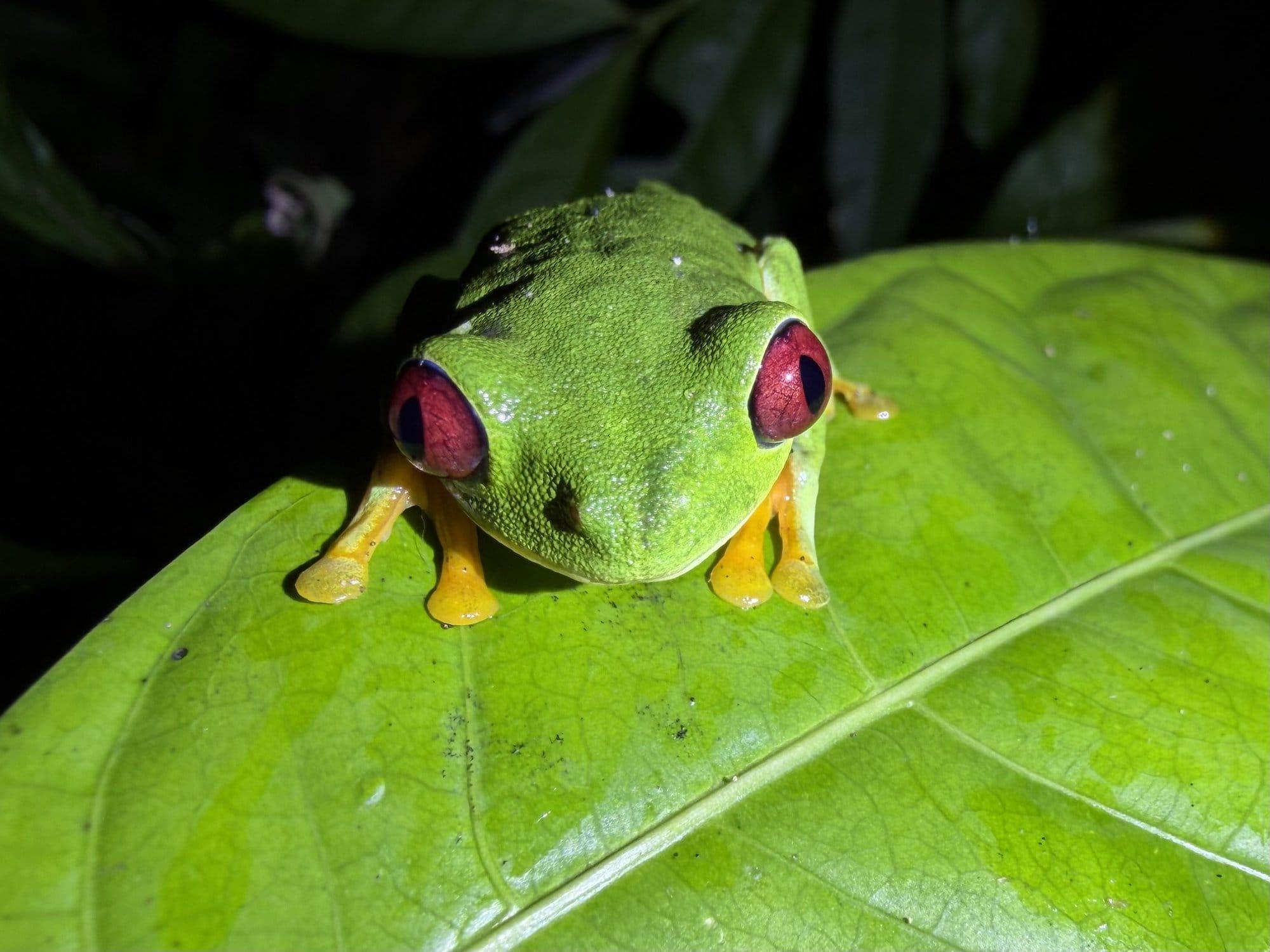
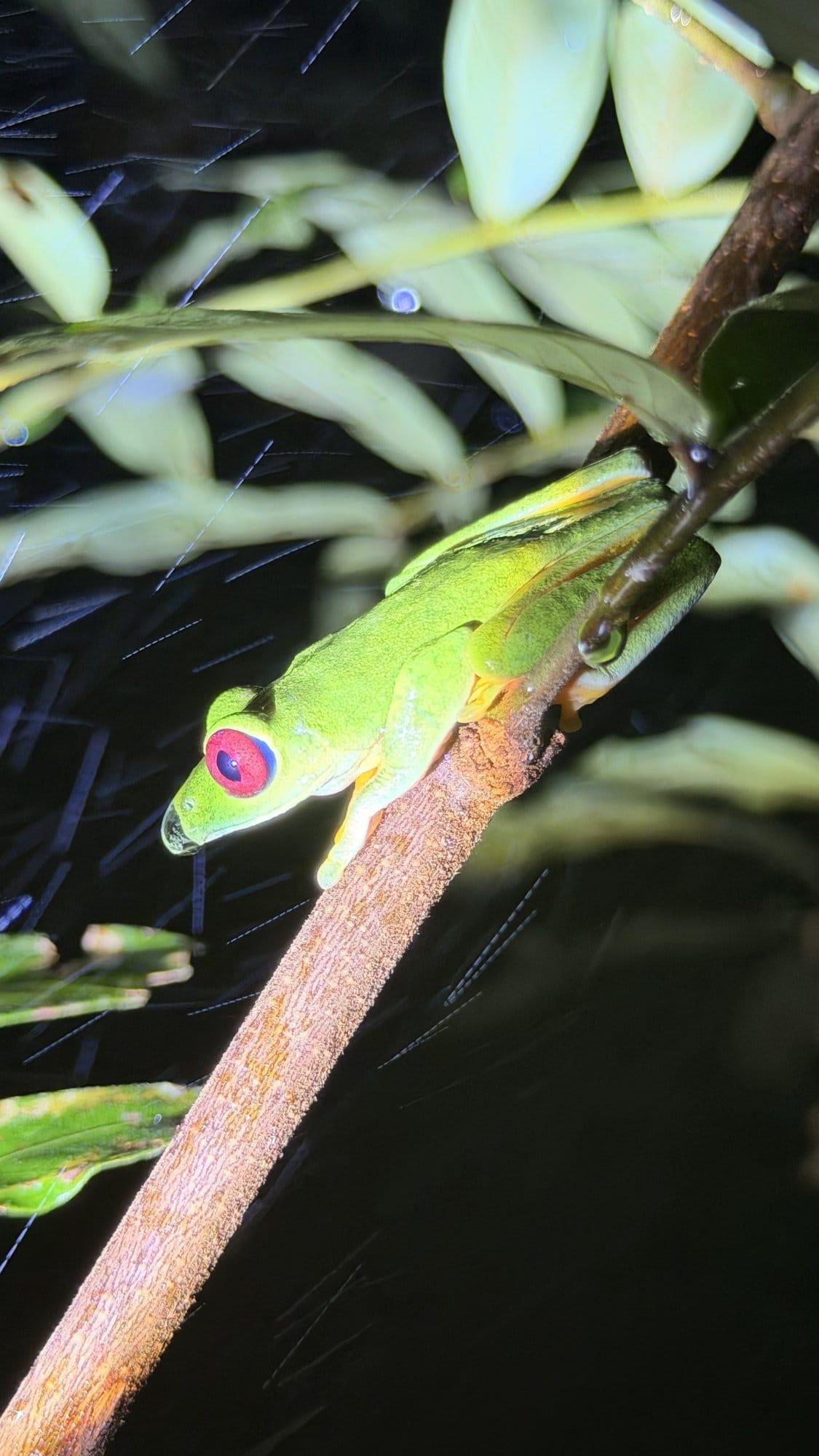
The star is the red-eyed tree frog, which spends the day folded flat and green on the underside of a leaf and comes out at night to hunt and call. In the green season (May to November) we find them on most hikes, often with eggs on the leaves above a pond. Other regulars are the small hourglass tree frogs and the big, patient leaf-litter frogs that freeze in the beam of the light.
Reptiles
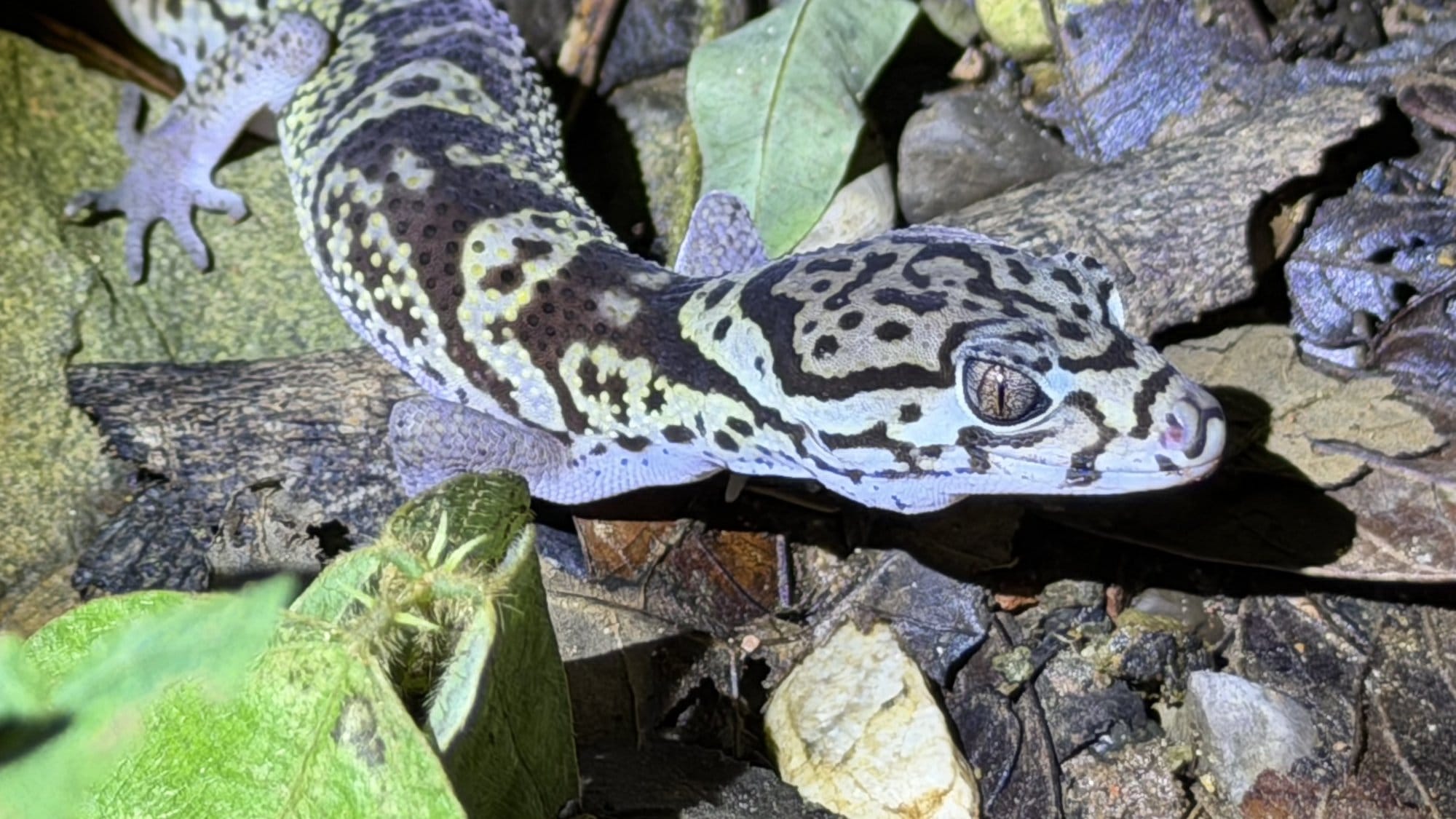
Central American banded geckos, with their eyelids and leopard-like pattern, hunt on the leaf litter after dark. Anoles and basilisks sleep on the tips of thin branches where a snake would shake them awake, which makes them easy to find with a light. Snakes themselves are an occasional sighting: cat-eyed snakes, a boa digesting on a branch. We look from a respectful distance and never handle anything.
Invertebrates, the real night shift
- Tarantulas waiting at the mouths of their burrows, usually the orange-kneed zebra tarantula of the dry forest.
- Scorpions that glow blue-green under the UV flashlight we carry. Finding one on a tree you just walked past is a highlight for most guests.
- Walking sticks, katydids and leaf-mimic insects that are invisible by day.
- Leaf-cutter ants in full procession, and whip spiders, harmless and strange, flat against the trunks.
- Fireflies and click beetles when the first rains arrive.
Mammals and birds
With luck and silence: a kinkajou working a fruiting tree, an armadillo snuffling through the leaf litter, an opossum, the eyeshine of a raccoon. Bats patrol the gaps in the canopy. Birds sleep in the open, so a flashlight can find a motmot, a manakin or a trogon roosting a meter from the trail, and the Pacific Screech-Owl and Common Pauraque call throughout the night.
How the hike works
We pick you up in downtown Montezuma around sunset and drive a few minutes to the trailhead. The walk itself is short and slow: distance is not the point, looking is. We carry headlamps, a UV light and a spotting light, and we spend about two hours on the trail. There are no steep climbs, but the surface is natural forest floor with roots, rocks and the occasional stream crossing, which is why we ask for closed shoes and why we do not recommend it for small children or anyone carrying one.
Dry season or green season?
Both are good, for different reasons. The green season brings the frogs out in numbers and fills the forest with sound; a hike an hour after a shower is the best amphibian night of the year. The dry season gives a drier trail, clearer skies for stars on the drive back, and easier views of sleeping birds in the leafless trees. Insects, geckos and scorpions are there year-round.
What to bring
- Closed shoes with grip. Not sandals.
- Long, light pants and a light long-sleeved shirt: better than repellent against mosquitoes and brushes with vegetation.
- Insect repellent for exposed skin anyway.
- A refillable water bottle. Nights are warm.
- Your own headlamp if you have one; we bring lights for everyone, but hands-free is nicer.
- A camera or phone. Night photos work best with the guide's light, not your flash.
Ready to meet the night shift? See times and request a date on the Nocturno Night Journey page, or WhatsApp us with your travel dates.
Questions we get asked
Frequently asked questions
Experience it
Tours mentioned in this post
Nocturno Night Journey
Montezuma comes alive at night.
A guided night hike through the forest around Montezuma, when nocturnal animals wake up and the sounds of the wild amplify.
- Forest trail a few minutes from Montezuma
- Starts around sunset and lasts about 2 hours
Curu Nature Escape
Animals, nature and more on a half day journey to Curu Wildlife Refuge.
Animals, nature, and more on this half day journey to Curu Wildlife Refuge. Learn about the nature that surrounds you in this unique ecosystem.
- Curu Wildlife Refuge
- 7:30am-1pm