
Birdwatching in Montezuma and Cabuya: What Birds You'll See and When to Go
By JC Aguirre, licensed guideUpdated 5 min read
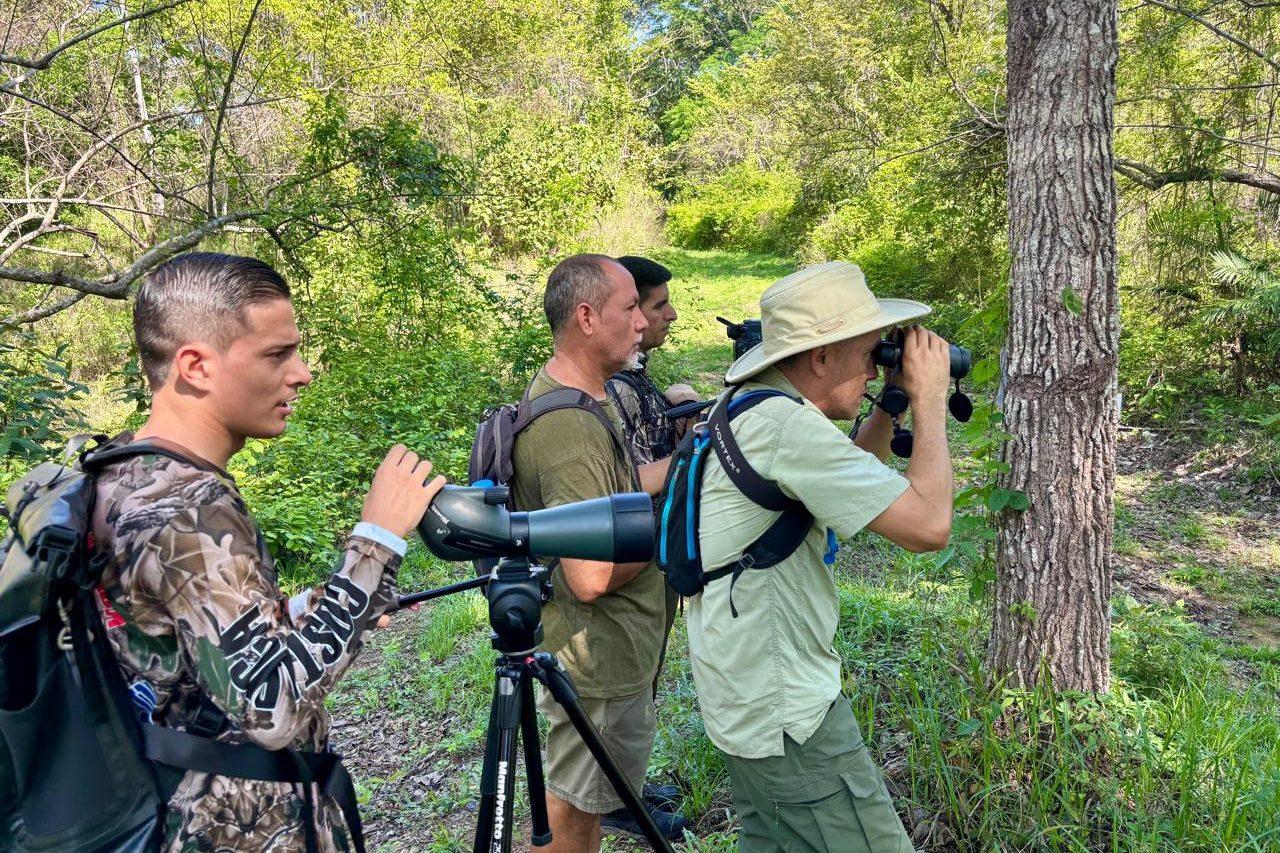
Short answer
The coast between Montezuma and Cabuya mixes tropical dry forest, mangrove, river mouths and rocky shore, so a single morning can produce 40 to 60 species: motmots, trogons, parakeets, herons, pelicans, frigatebirds, hummingbirds, woodpeckers and, increasingly, Scarlet Macaws. The best hours are 5:30 to 8:30 am. December to April adds northern migrants and clear skies, but birding is good all year.
- Typical morning list
- 40–60 species
- Best hours
- 5:30 – 8:30 am
- Migrant season
- October – April
- Habitats
- Dry forest, mangrove, river mouth, beach, farmland
- Our tour
- Bird Lover's Morning, Tue/Thu/Fri/Sat, breakfast included
Costa Rica has more than 900 recorded bird species in a country smaller than West Virginia, and the southern Nicoya Peninsula gives you a surprisingly rich slice of them without driving anywhere. Between the village of Montezuma and the fishing hamlet of Cabuya, 7 km down the coast, you walk through five habitats in a morning. Here is what that means in practice.
What birds can you see around Montezuma?
These are the species we find on most Bird Lover's Mornings. None of them are guaranteed, which is the point of birding, but all of them are regular residents or seasonal visitors of the area.
Forest edge and gardens
- Turquoise-browed Motmot, the racket-tailed bird on every postcard, sitting still on low branches.
- Black-headed Trogon and, in the moister forest near Cabo Blanco, other trogons.
- White-throated Magpie-Jay, loud, curious and impossible to miss.
- Hoffmann's Woodpecker and Lineated Woodpecker on dead trunks.
- Orange-fronted Parakeets and White-fronted Parrots in noisy flocks at dawn.
- Long-tailed Manakin, whose males dance in pairs on a display branch.
- Rufous-naped Wren, Great Kiskadee, Social Flycatcher, Inca Dove, Groove-billed Ani.
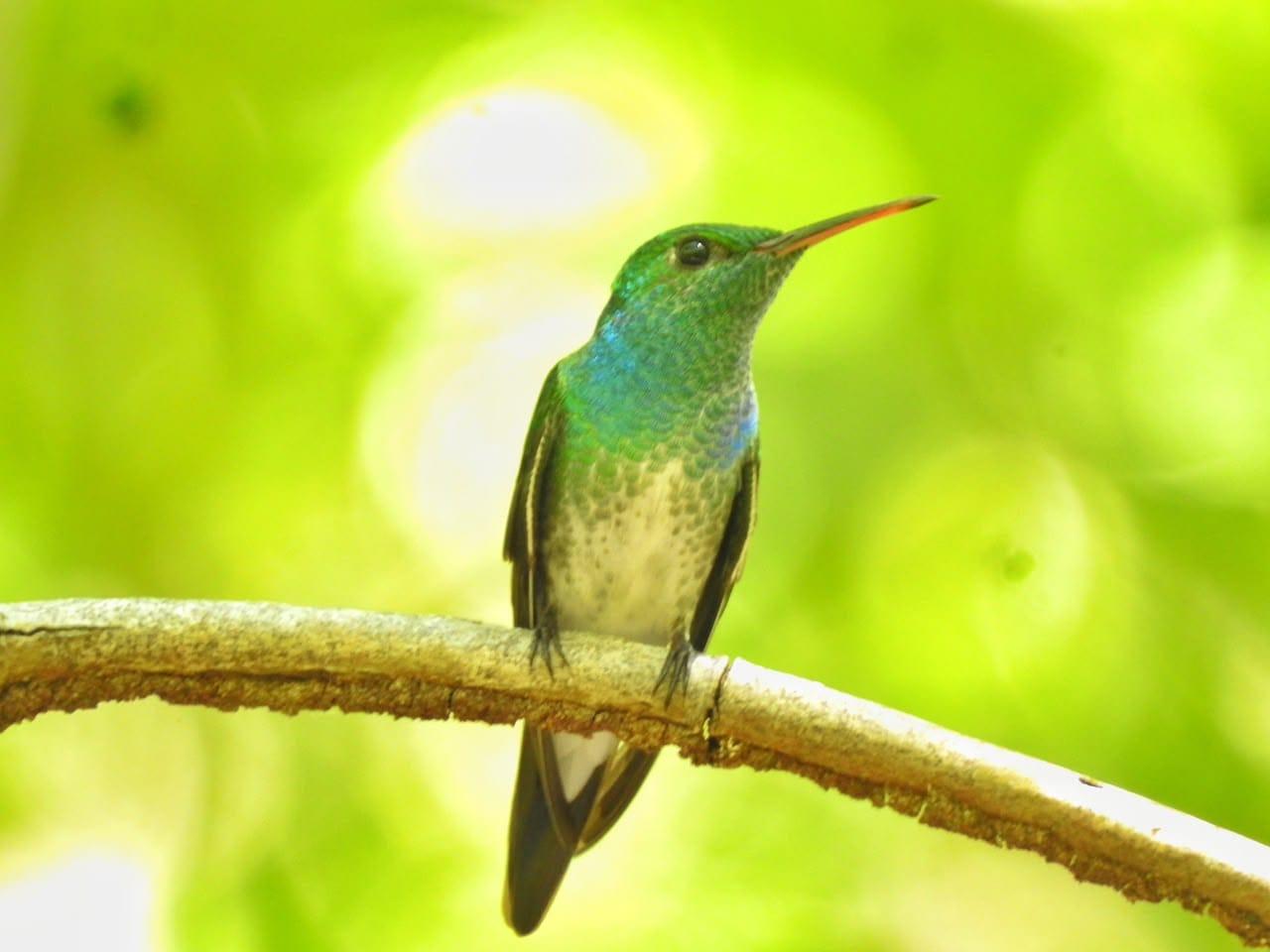
- Hummingbirds such as Cinnamon and Steely-vented Hummingbird, often at flowering trees along the road.
Beach, tide pools and river mouths
- Brown Pelicans diving just beyond the breakers and Magnificent Frigatebirds cruising overhead.
- Yellow-crowned Night Heron, Little Blue Heron, Snowy Egret and Great Egret working the tide pools at Cabuya.
- Shorebirds in season: Whimbrel, Spotted Sandpiper, Willet and Ruddy Turnstone.
- Ringed and Green Kingfisher at the river mouths.
Raptors and the big ones
- Crested Caracara patrolling pastures and the beach, plus Roadside Hawk, Yellow-headed Caracara and Laughing Falcon.
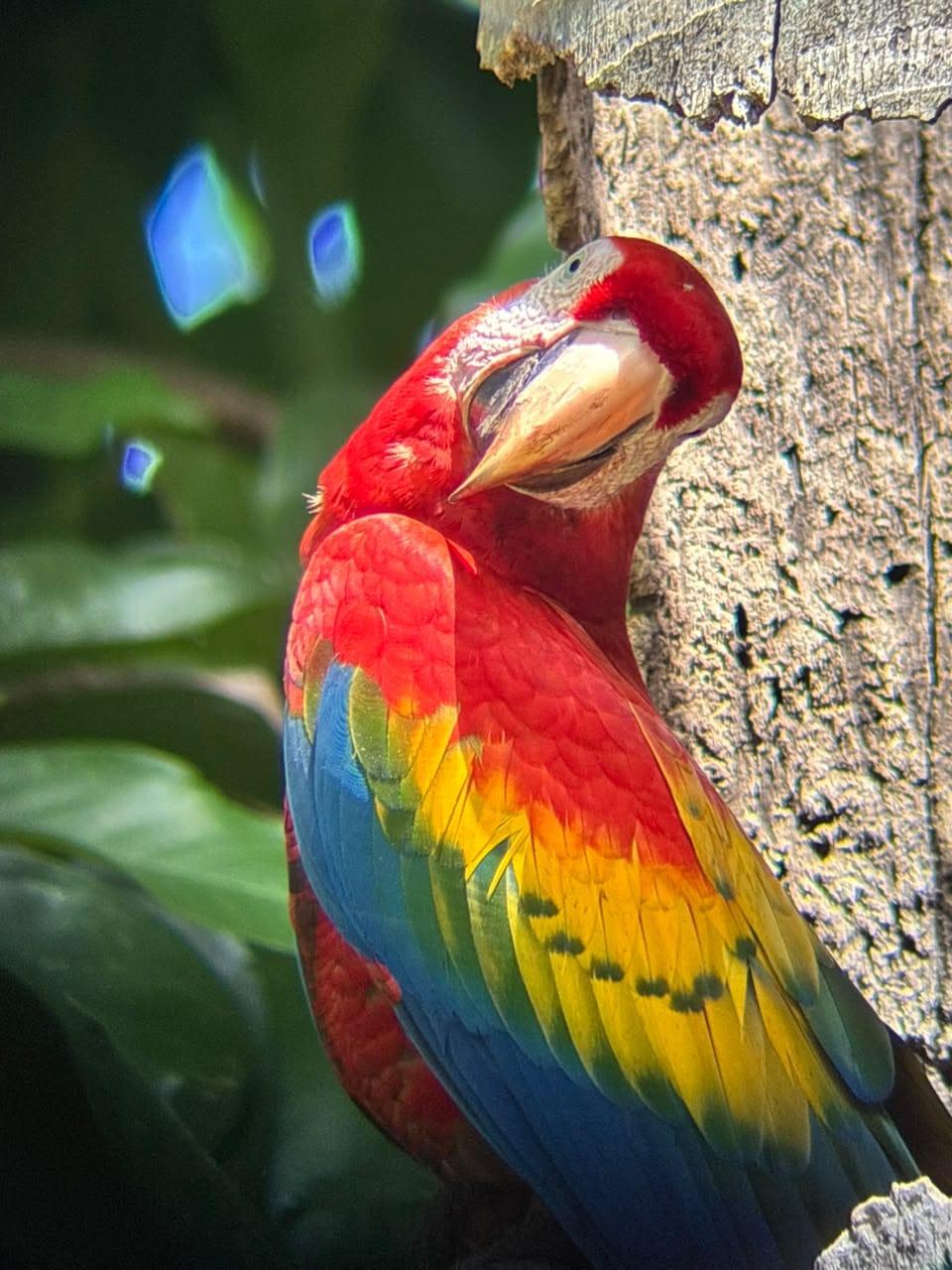
- Scarlet Macaws: thanks to decades of release work in the peninsula, pairs now fly over Montezuma and Cabuya regularly. Hearing them before you see them is part of the fun.
- Yellow-naped Parrots, a threatened species that still holds on in the dry forest of the Nicoya Peninsula.
When is the best time for birding in Montezuma?
Any month works, but each season has a flavor. From October to April the resident birds are joined by northern migrants: warblers, orioles, tanagers and flycatchers that spend the winter here. December to April is also the dry season, with clear mornings and leafless trees in the dry forest that make spotting easier. From May to November the forest is green and loud, many residents are nesting, and you will share the trails with far fewer people. Afternoon showers rarely affect a 5:30 am start.
Swipe sideways to see the whole table →
| Months | What stands out |
|---|---|
| December – February | Peak migrants, dry forest leafless, easiest viewing, busiest tourist season |
| March – April | Flowering trees draw hummingbirds and orioles; hot and dry |
| May – July | First rains, nesting season, manakins displaying, quiet trails |
| August – November | Greenest forest, returning migrants from September, lowest visitor numbers |
Why early morning matters
Birds feed hardest in the first two hours after sunrise, before the heat sets in. That is why our Bird Lover's Morning starts at 5:30 am: we watch the sun rise over the gulf from Cabuya, work the shore while the herons are still fishing, then move to forest edge as the parakeets start to move. By 8:30 am, when we sit down for a light breakfast, the list is usually long and the day is still young.
What to bring (and what we bring)
- Binoculars if you own them; 8x42 is ideal. If not, don't worry: we carry binoculars and a spotting scope for the group.
- Walking shoes, a hat, sunblock and repellent. Light neutral colors are better than white or bright red.
- A refillable water bottle. Montezuma's tap water is safe and we top you up.
- A camera with zoom if you like; phone photos through the scope work surprisingly well.
- Optional swimsuit: the tide pools at Cabuya are tempting once the birding is done.
New to birding? This is a good place to start
You do not need to know a motmot from a magpie-jay to enjoy a morning out. Most of our guests are curious travelers, not life-listers, and we pace the walk for everyone, including children. Experienced birders get a local who knows where the manakins dance and which tree the macaws prefer this month. Either way, you leave with breakfast in your stomach and a list in your pocket.
Questions we get asked
Frequently asked questions
Experience it
Tours mentioned in this post
Bird Lover's Morning
Sunrise over the Nicoya Gulf and some of Costa Rica's most beautiful birds.
If you love birds, you've come to the right place. Take a morning to see some of Costa Rica's most beautiful birds and let the guide do the hard work.
- Montezuma/Cabuya
- 5:30am-8:30am
Curu Nature Escape
Animals, nature and more on a half day journey to Curu Wildlife Refuge.
Animals, nature, and more on this half day journey to Curu Wildlife Refuge. Learn about the nature that surrounds you in this unique ecosystem.
- Curu Wildlife Refuge
- 7:30am-1pm